Corvette Racing · 2014–2019
Corvette C7.R
The C7.R raced in what many consider the golden age of GT racing — a grid stacked with factory efforts from Ford, Ferrari, Porsche, and BMW, all pouring money into the same class at the same time. Winning anything in that company was hard. The Corvette did it anyway, including one of the most dramatic Le Mans victories in the program's history.
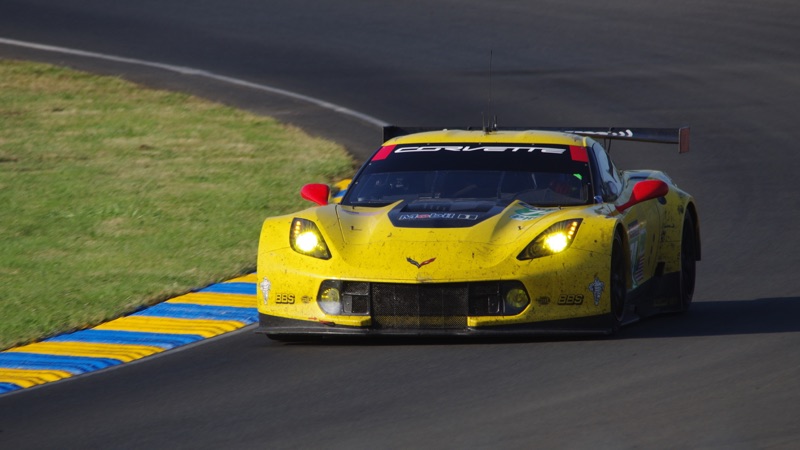
Developed hand-in-hand with the road-going C7 Stingray and Z06, the C7.R campaigned in IMSA's GTLM class in North America and GTE Pro at Le Mans. The competition was merciless: Ferrari's 488, Porsche's 911 RSR, BMW's efforts, and — from 2016, back for the 50th anniversary of its own Le Mans legend — Ford's returning GT. Races were routinely decided by seconds after twenty-four hours.
Le Mans, 2015
The signature moment came in 2015. One of the two Corvettes was destroyed in a heavy practice crash before the race even started — and the surviving car went on to win the GTE Pro class, a gut-punch-to-triumph swing that captured exactly how the program operated: never out of it until the flag. It was the C7.R's Le Mans class win, and it stood alongside a stack of IMSA victories over the car's six-season run.
The record
- 2015 Le Mans GTE Pro class win — after losing its sister car in a practice crash
- Roughly 17 wins across the C7.R's career, plus IMSA GTLM titles
- Fought Ford GT, Ferrari 488, Porsche 911 RSR, and BMW in the GTLM/GTE era
- Core drivers: Antonio Garcia, Jan Magnussen, Oliver Gavin, and Tommy Milner
The C7.R was the last front-engine race Corvette — the end of a line that ran all the way back to the L88s at Le Mans in the 1960s. What came next moved the engine, at last, to where Zora Arkus-Duntov had always wanted it.