People · Harley Earl · Prologue
The Waldorf, January 1953
Waldorf-Astoria Hotel, New York City — January 17, 1953
The ballroom smells of fresh paint and cigarette smoke, and the man who built it is standing at the back, watching, the way a director watches an opening night he can no longer control. Harley Earl is fifty-nine years old, six-foot-four, famous inside General Motors for a temper that could flatten a design review and a gift for showmanship that could sell ice to a Michigan winter. Tonight he is selling something else entirely: a low white two-seater on a rotating stage, wire wheels, a toothy chrome grille, a name borrowed from a fast little warship. The placard calls it a "dream car." Everyone in this room, Earl included, knows that phrase is a hedge.
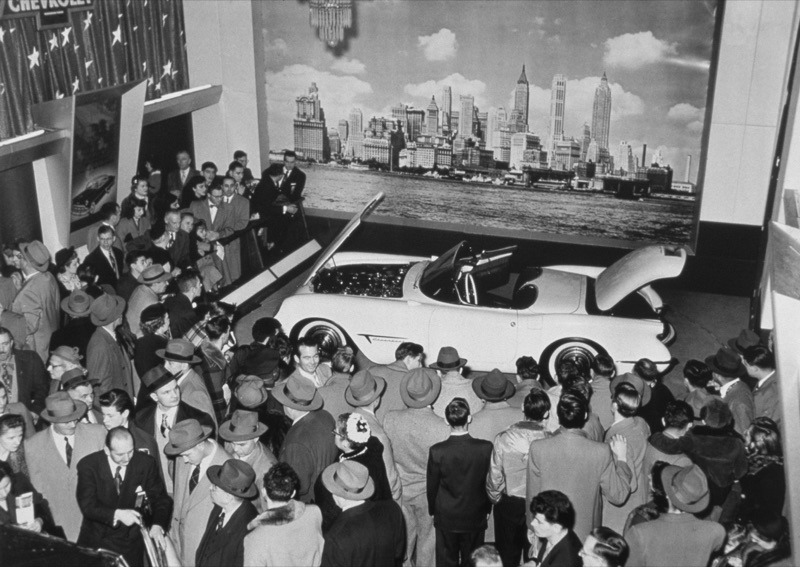
Motorama is Earl's invention as much as any car in the building — a traveling spectacle of turntables, showgirls, and impossible chrome creatures that exists for exactly one purpose: to let General Motors watch America's face while it looks at the future, before committing a dollar of tooling money to build it. Most of what rotates on these stages will never be built. That is the whole point of a dream car. It dreams so the company doesn't have to risk anything real.
Except Earl doesn't want this one to stay a dream. He has watched too many young Americans come home from Europe having caught the sports-car bug — MGs, Jaguars, tight little roadsters that make a Chevrolet sedan feel like a parlor sofa — and watched Detroit shrug at all of it. Earl thinks Detroit is wrong. He has thought so for years. Tonight is the test of whether anyone else agrees.
Chevrolet's general manager, Thomas Keating, has told the press the car is “six months to a year” from being real, the standard hedge language of a company that hasn't decided anything yet. But the crowds don't hedge. They press three deep around the rope line for a car that, as far as anyone outside this room knows, does not exist and never will. Earl watches the reaction build across the evening the way he has watched a hundred design reviews build toward a decision — and somewhere in that crowd, taking his own notes, stands a Russian-born engineer who has never met Harley Earl and is about to write him a letter.
Earl doesn't know that yet. Tonight he only knows one thing for certain: the crowd wants this car. Whether General Motors will let them have it is a fight that starts the moment the Motorama lights go dark — and to understand why Earl was willing to have that fight at all, you have to go back forty years, to a blacksmith's shop in Hollywood building carriages for men who would soon want motorcars instead.