People · Bill Mitchell · Chapter 3 of 6
Racing By Other Means
GM Styling, Warren, Michigan — 1958–1959
Mitchell is barely into the chair Earl vacated in December 1958 when he makes his first real statement as design chief, and it isn't a production car at all. Sitting in a corner of GM's engineering department is the abandoned chassis from the Corvette SS — the development mule that Fangio and Moss had lapped so shockingly fast at Sebring in 1957, orphaned the moment the AMA racing ban killed the program before it ever reached Le Mans. Officially, that chassis is scrap. Mitchell looks at it and sees the opposite of scrap.
The rules he's inherited are unambiguous: General Motors does not race, officially, in any form. But the rules say nothing at all about a vice president's personal property. Mitchell has designer Pete Brock rough out a sketch, hands development to the young Larry Shinoda, and skins the SS mule's chassis in a low, voluptuous new body — one that borrows its name from a fish and previews, unmistakably, the shape of the Corvette still two years from production. He registers the finished car as his own. On paper, Bill Mitchell simply happens to own an extraordinarily fast personal automobile.
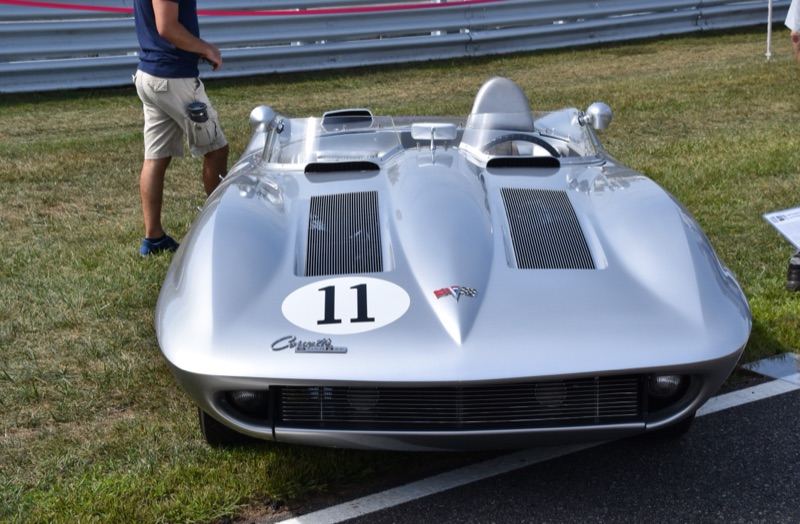
The Stingray Racer hits the track for the first time on April 18, 1959, with SCCA national champion Dr. Dick Thompson at the wheel. It wins races. In 1960 it wins the SCCA's C-Modified national championship outright — a genuine, credentialed racing title, earned by a car that officially has nothing to do with General Motors' engineering department. Mitchell campaigns it, shows it, is photographed beside it constantly. If the distinction between “GM racing program” and “design chief's weekend car” strikes anyone as suspiciously thin, no one in a position to stop it seems eager to make the case.
The policy said General Motors didn't race. It never said its vice president of design couldn't own a very fast car and drive it to a championship.
It is, in spirit if not method, the exact move Zora Arkus-Duntov is making at the same moment with his own “research vehicle,” the CERV I — two men in two different departments, independently deciding that a corporate ban is a constraint to be routed around rather than obeyed. Mitchell goes further still: he sets up a small, hidden design space that will become known as Studio X — room for one car, two drafting tables, a coffee pot, and no visitors who haven't been personally cleared. Accountants don't know it exists. Division heads don't know it exists. Some of GM's most celebrated show cars of the next decade will be born inside it, unbothered by anyone with the authority to say no.
The Stingray name doesn't stay confined to Mitchell's personal racer for long. Within four years it will be stamped on a production fender — attached to the most argued-over Corvette body panel in the car's history.