People · Betty Skelton · Prologue
Daytona Beach, 1956
Daytona Beach Road Course, Florida — February 1956
The measured mile runs down hard-packed sand between the dunes and the surf, marked at each end by timing lights that don't care who you are or what you've already done with your life. Betty Skelton has done quite a lot. Twenty-nine years old, five championship trophies for flying upside down at treetop height, and a résumé that already includes being the first woman ever hired to test cars for a living. None of it matters to the clock. The Corvette in front of her either goes fast enough, or it doesn't.
The car has been fussed over by two men who take speed very personally. One is a Russian-born Chevrolet engineer with a temper and an accent, a man named Zora Arkus-Duntov, who has spent the winter trying to convince his own company that its pretty little roadster is not, in fact, a toy. The other is Smokey Yunick, a mechanic out of Daytona itself with a reputation for finding horsepower in places other people don't think to look. Between them they've fitted aluminum trim to shave weight and a brake-cooling duct to keep the car alive through repeated runs. What they haven't done — what nobody has ever done before — is hand a car like this to a woman and ask her to find out what it will really do.
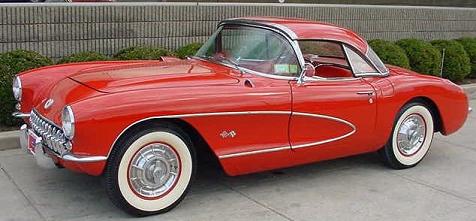
Skelton is not, technically, supposed to be the story here. She has been hired by Chevrolet's ad agency as a technical narrator and spokesperson — a job that exists because she is telegenic, articulate, and already famous, not because anyone expects her to set a record. But Skelton has spent a decade making a career out of the gap between what people expect of her and what she actually does. She flew her first solo at twelve, four years before it was legal. She won three consecutive world aerobatic championships and then quit at the top, on her own terms, because nobody could offer her a harder problem. A flying mile of Florida sand is, by her standards, almost restful.
The run comes in at 137.773 miles per hour — the second-fastest time in the entire Production Car Class that week, women's or men's, beaten only by a handful of the factory's own hottest entries. She takes the Ladies' Sports Car Class outright. By the time she's out of the car, the nickname that will follow her for the rest of her life is already forming in the press tent: the First Lady of Firsts.
She had already been the fastest woman in the sky. Now she was the fastest woman on wheels — and Detroit had barely started asking what else she could do.
It is, depending on how you count, maybe her tenth or eleventh "first." To understand how she got to that beach at all — and why a Chevrolet engineer trusted her with his car in the first place — you have to go back twenty-nine years, to a little girl in Pensacola, Florida, who liked airplanes better than dolls.